Business

The Smart Way to Measure Marketing ROI for Small and Mid-Sized Businesses

Ask most business owners whether their marketing is working and you will hear something like “we get a lot of traffic” or “our Instagram is growing”. Those may be good signs, but they are not answers. Marketing return on investment, or ROI, asks a harder and more useful question: for every dollar we spend, how many dollars come back?

You do not need an analytics team or expensive software to answer it. You need a handful of numbers, a consistent way of tracking them and the discipline to look at them every month. This guide shows you how.

Why “we get a lot of traffic” is not an ROI answer

Providers such as scalepoint.au offer a free audit and a strategy call that starts from the client’s own numbers, and that is a good habit to copy. Without an agreed set of numbers, businesses drift toward whatever is easiest to measure, which is usually activity rather than results.

Activity numbers include website visits, social media followers, email open rates and ad impressions. They are not useless, because they can show whether something is moving in the right direction. But they do not tell you whether money was made. A post can go viral and bring no customers. A quiet campaign can bring ten high value clients.

Results numbers are different. They count enquiries, sales and revenue, and they link directly to cost. Those are the numbers ROI is built on.

The basic formula and what to include in cost

Digital Marketing Business

Marketing ROI is calculated like this:

\text{ROI} = \frac{\text{revenue from marketing} – \text{marketing cost}}{\text{marketing cost}} \times 100

Here is a simple example in Australian dollars. A business spends $4,000 in a month on marketing and wins customers worth 14,000inrevenuefromthateffort.Thecalculationis(14,000 minus $4,000) divided by $4,000, which equals 2.5, or an ROI of 250 percent.

The formula is simple. The hard part is deciding what counts as cost. Many businesses include only advertising spend and leave out the rest. To get an honest figure, include:

  • Advertising spend on search, social and other paid channels.
  • Fees paid to agencies, freelancers or consultants.
  • Software and tools used for marketing, such as email platforms and analytics.
  • A share of staff time spent on marketing, if someone is paid to do it.

If you leave out costs, your ROI will look better than it really is, and you may make poor decisions as a result.

One more point on revenue. If your customers buy more than once, consider using the profit they bring over their first year, not only the first sale. A customer who spends $300 today and $600 more over the next twelve months is worth more than the first transaction suggests.

Track the right numbers: leads, cost per lead, cost per customer, customer value

ROI is a summary figure. To improve it you need to see what sits underneath. Four numbers do most of the work.

  • Leads: the number of people who enquire, book or request a quote.
  • Cost per lead: marketing cost divided by the number of leads.
  • Cost per customer: marketing cost divided by the number of leads that become paying customers. This is often called customer acquisition cost.
  • Customer value: the average revenue or profit one customer brings over a set period, such as twelve months.

When cost per customer is lower than customer value, marketing is paying for itself. When it is higher, you are losing money on each sale unless customers stay for a long time. Seeing these numbers side by side makes the next decision much clearer.

Attribution in plain terms

Attribution is the question of which marketing activity deserves credit for a sale. It sounds technical, but the basic ideas are easy to grasp.

First touch gives credit to the first thing that brought the customer to you, such as a search result or a social post. Last touch gives credit to the final thing they did before buying, such as clicking an email link. Real customers usually do several things before they buy, so both views are partly wrong, but both are useful. First touch shows what creates demand and last touch shows what closes it.

When you cannot tell, ask. Add a short question to your enquiry form or phone script: “How did you hear about us?” The answers are imperfect, but they often reveal channels such as word of mouth and podcasts that analytics tools miss. Compare them with your tracking data and you will have a more complete picture than either source gives alone.

Set up tracking with free or low cost tools

You can build a workable measurement system with tools most businesses already have or can get at little cost.

  1. Website analytics. A free analytics platform such as Google Analytics will show where visitors come from and what they do. Set up goals or events for your key actions, such as form submissions and phone calls.
  2. Tagged links. Add campaign tags to links in emails, ads and social posts so that visits are labelled by source.
  3. Call tracking. If phone calls are a main source of enquiries, use a tracking number or ask callers where they found you.
  4. A simple customer record. A spreadsheet or basic customer management system that records the source of each lead and whether it became a sale.

The last item matters most. Linking a lead’s source to the eventual sale is what turns activity data into ROI.

Read the results and decide where to move budget

Once a month, fill in a simple report like this one:

Channel Spend Leads Customers Revenue
Paid search $1,500 30 8 $6,400
Email $300 12 5 $2,500
Social media $800 15 2 $1,200
Content and SEO $1,000 18 4 $3,200
Referrals $400 10 6 $4,800

The figures above are an example only, so use your own. From each row you can work out cost per customer and ROI. In this example, referrals and email deliver the strongest returns, while social media returns the least for what it costs. That does not mean social media should be dropped. It might support awareness in ways that are hard to count. But it does suggest testing a smaller budget there while putting more behind what is clearly working.

Remember to compare channels over a fair time frame. Content and SEO often take months to pay back, so judging them after four weeks would be unfair.

A note on ROI and return on ad spend

You may come across the term return on ad spend, often shortened to ROAS. It measures revenue divided by advertising spend only, so a ROAS of 4 means $4 of revenue for every $1 spent on ads. ROAS is useful for judging individual ad campaigns, but it ignores other costs. ROI is broader and gives a truer picture of whether the whole marketing effort is profitable.

Start imperfect and improve

A rough measure that you use every month is worth far more than a perfect one that never gets built. This week, list your marketing costs, count your leads and customers by source, and work out your cost per customer. You will probably find that some of your effort is paying off well and some is not. That knowledge is the foundation for every good marketing decision that follows.
A Buyer’s Guide to Ordering Heavy Equipment Parts Online

Plenty of contractors still default to a phone call or an in-person supplier visit when they need a part, often out of habit, or a lingering worry about ordering the wrong thing online and being stuck waiting for a return and a second shipment. With a bit of care, ordering online is often faster and just as reliable, once you know what to check before hitting confirm.

Why More Contractors Are Ordering Parts Online

Buying earthmoving parts online has become increasingly common among contractors who value the speed and visibility it offers over traditional ordering methods. Rather than waiting on hold for a phone quote or driving to a supplier’s counter, online ordering lets you see stock availability immediately, compare options side by side, and place an order in minutes rather than hours.

For contractors managing multiple pieces of equipment or working across several sites, this efficiency adds up quickly, particularly when a part is needed urgently and every hour of delay matters.

Identifying the Right Part Before You Order

The single most important step in ordering online is correctly identifying the part you need. Start with your equipment’s model and serial number, which most suppliers use to narrow down compatible parts accurately. If you have access to the equipment manual, the specific part number listed there removes almost all guesswork.

If you’re replacing a worn or failed component, the old part itself is often the best reference, since part numbers are frequently stamped or printed directly on the component. Taking a clear photo of the part, including any visible numbers or markings, can also help confirm identification if you’re unsure or need to check with a supplier before ordering.

Avoiding Common Ordering Mistakes

A few recurring mistakes account for most online ordering problems. Ordering based on a general description alone, without confirming an actual part number, is one of the most common causes of receiving the wrong item. Skipping over compatibility notes on a product listing is another frequent issue, since a part that looks similar may not actually fit your specific model or configuration.

It’s also worth deliberately checking whether a listing is for a genuine or aftermarket part, since the two can sometimes look identical in a product photo but differ significantly in price and fit. Finally, overlooking shipping timeframes can catch out contractors with an urgent need, so it’s worth confirming realistic delivery estimates before assuming a part will arrive as quickly as needed.

What to Check Before Completing an Order

Before finalising a purchase, take a moment to review a few key details. Check the supplier’s return or exchange policy in case the part doesn’t fit as expected, since a straightforward returns process removes much of the risk from ordering online. Confirm shipping speed and whether tracking is provided, particularly for time-sensitive orders where knowing exactly when a part will arrive matters.

It’s also worth checking whether the supplier offers accessible support options if you have questions after ordering, and whether the part itself comes with any warranty coverage, which can offer useful peace of mind for higher-cost components.

Getting Help When You’re Not Sure

If you’re at all uncertain about a part’s fit, particularly for older or less common equipment, most reputable suppliers offer a way to confirm compatibility before you commit to an order. Reaching out through live chat, phone, or email with your equipment’s details and, ideally, a photo of the part in question, is a straightforward way to remove the guesswork entirely.

This extra step takes only a few minutes but can save the far greater hassle of dealing with a wrong-part return and a second wait for the correct component.

Ordering With Confidence

Ordering heavy equipment parts online doesn’t need to be a gamble. With the right part identification upfront, a careful check of compatibility and supplier policies, and a quick message to support when in doubt, online ordering can be just as reliable as traditional methods, often considerably faster. If you’re ordering online for the first time and have any doubts about fit or compatibility, don’t hesitate to reach out to a supplier’s support team before placing your order.

Luxury Metal Business Cards: Are They Worth the Price?

Ever handed someone a business card and watched them barely glance at it? Now imagine handing over a sleek, shiny metal card. Instantly, you’ve got their attention and their respect. But are these luxury cards just a flashy gimmick, or do they actually add value to your business? Let’s break it down together.

First Impressions: Prestige You Can Feel

Let’s be honest:

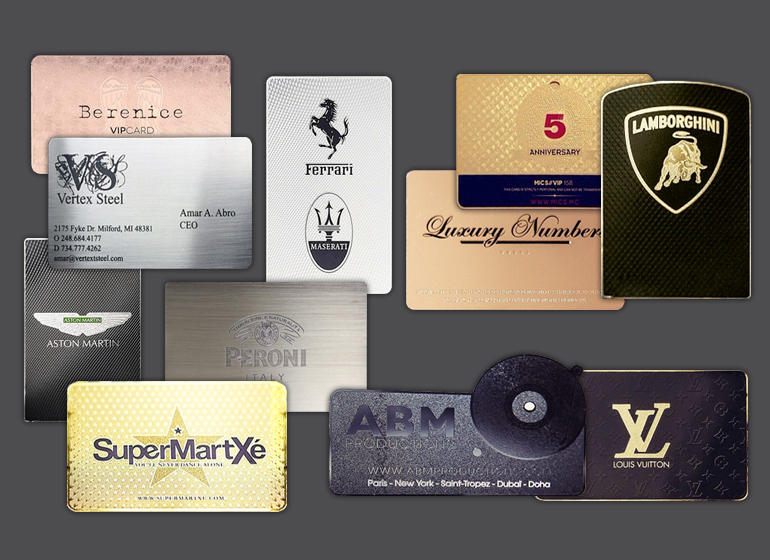
A metal business card screams exclusivity. The cool touch, the weight, the shine it all tells your contact, “I mean business.” You don’t have to brag or oversell yourself; the card does it for you.

How do people react?

 They pause and actually look at the card.

 You’ll get comments, questions, and genuine curiosity.

 Suddenly, you’re not just another contact they remember you.

Bottom line:

If you want to stand out and spark real conversations, metal cards are a conversation starter on their own. And if you’re curious about investing in these distinctive cards, check out the latest metal card pricing for detailed options and rates.

Durability: Tougher Than Paper

Metal Business Cards


Let’s face it: paper cards get beat up fast. They bend, tear, and end up looking sad in the bottom of a bag.

Metal cards, though?

 Resist bending and scuffing

 Survive spills no soggy corners!

 Stay crisp and professional, even after months in a wallet

But nothing’s invincible:

Sure, metal can scratch or dent if you treat it roughly, but it’ll outlast paper by a mile.

So, if you want your card to last (and keep looking sharp), metal is the way to go.

Customization: Make Your Brand Shine

One of the coolest things about metal cards is how customizable they are.

 Choose from different finishes: brushed, matte, shiny, colored, engraved you name it.

 Add deep engraving, colored highlights, or even cutout designs.

 Make the design match your brand’s vibe: bold, subtle, techy, classic.

Pro tip:

Keep things readable don’t let fancy design get in the way of legibility. People should be able to read your info at a glance.

Cost & ROI: Are They Worth the Investment?

Okay, here’s the big question: are luxury metal cards worth the higher price tag?

What You’re Paying For

 Higherquality materials and finishes

 Unique, custom design work

 Durability that lasts years, not days

What Do You Get Back?

 People remember you (and talk about your card)

 You project trust and professionalism

 Potentially higher response rates and faster deals (because you stand out)

Think of it like this:

If one big deal or client comes from that memorable first impression, the cards might pay for themselves.

Everyday Practicality: Usability & Storage

Let’s get real how do these cards hold up in daily life?

Durability

 Metal cards stay looking good longer, but they’re not indestructible.

 Choose cards with scratchresistant coatings.

 Avoid tossing them loosely with keys or coins.

Storage


 Carry just a few at a time no need to lug around 50.

 Use a slim case or a dedicated wallet slot.

 Keep them separate from other cards to avoid scratches.

Wear & Tear

 Clean hands help avoid fingerprints.

 Inspect your stash regularly replace any that get dinged up.

 Treat them like tiny, fancy billboards for your brand.

Should You Go for Metal Cards?

Here’s when metal cards make sense:

 You want to make a seriously memorable impression.

 Your business is all about quality, luxury, or innovation.

 You’re meeting highvalue clients, investors, or partners.

 You want your brand to feel permanent and premium.

But maybe skip them if:

 You mostly do highvolume, casual networking.

 You’re on a tight budget or don’t need that “wow” factor every time.

The Final Word

Metal business cards aren’t for everyone, but if your brand is all about standing out and lasting impressions, they’re hard to beat. Think of them as tiny investments in your reputation ones that might just open the right doors.

Ready to try them? Or sticking with paper for now? Either way, make sure your card says exactly what you want about your business loud and clear.